What Are the Best Showers for Low Water Pressure?
The best showers for low water pressure depend almost entirely on which water system your house has, so that is the question worth answering first. A home running on a gravity-fed system with a tank in the loft has completely different options to one on a combi boiler, and a shower that performs beautifully in one will disappoint in the other. Work out the system and the bathroom choices narrow down quickly.
Start by working out which water system you have
Three setups cover most UK homes. A gravity-fed system has a cold water tank in the loft and a hot water cylinder, usually sitting in an airing cupboard, and it relies on the height of that tank to create any pressure at all. This is where weak showers most often come from. A combi boiler has neither tank nor cylinder and heats mains water on demand, so it runs at whatever pressure the street gives you. The third is a mains-pressure cylinder, which stores hot water but has no loft tank, and these generally perform well.
If you are not certain which you have, the loft settles it. A cold water tank up there means gravity. No tank and no cylinder anywhere means a combi. It matters because advice about showers for low water pressure is close to useless until you know which of the three you are dealing with.
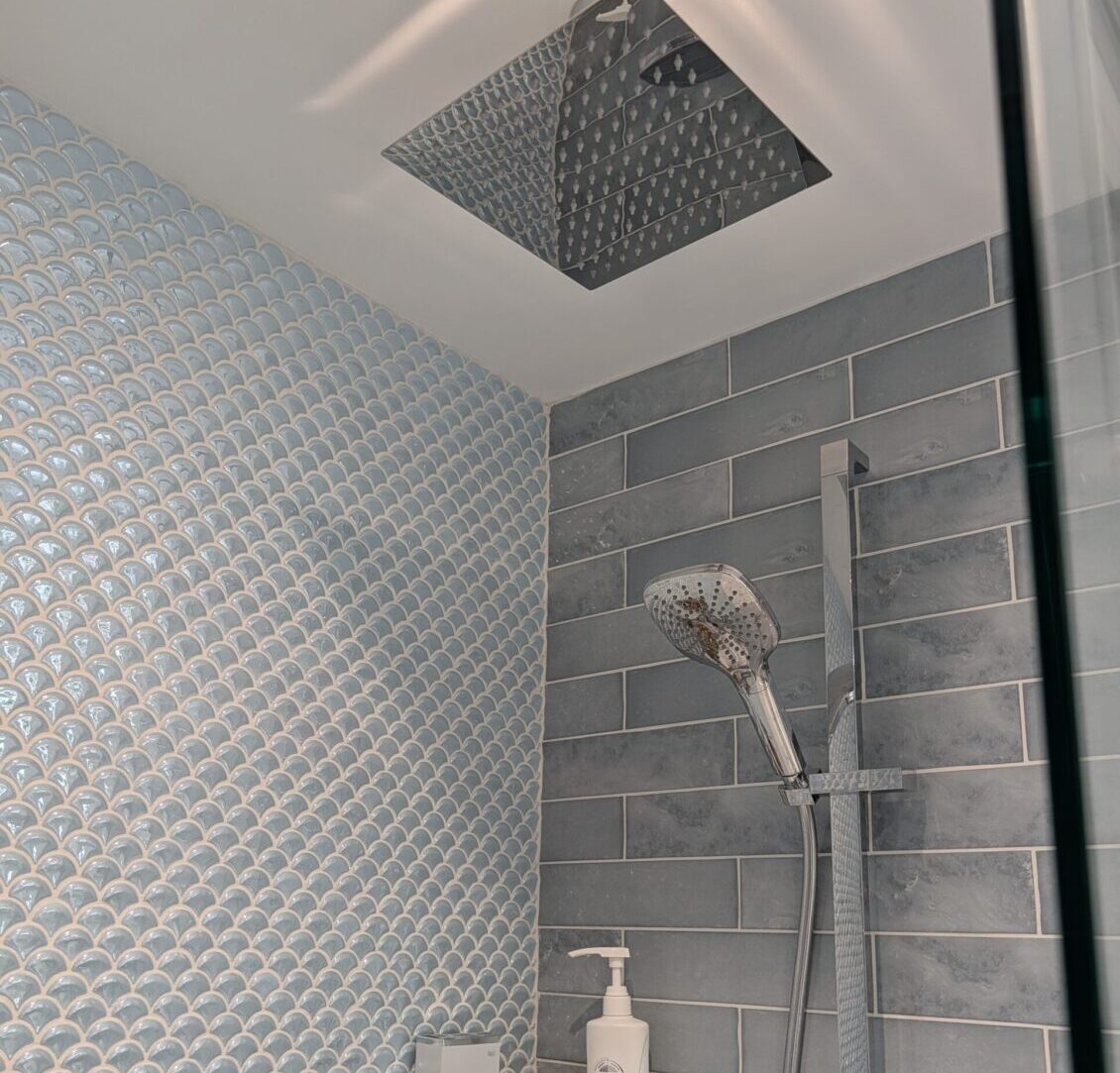
Electric showers
Electric showers come up more than anything else when people ask about showers for low water pressure, and with good reason. An electric shower takes cold water straight off the mains and heats it as it passes through the unit. Because it never touches your hot water supply, it sidesteps the problem completely when the weakness is on the hot side. Most need somewhere around 0.7 to 1 bar to operate, which is a lower threshold than the majority of mixers ask for.
The trade-off is flow. The unit heats water as it moves, so there is a ceiling on how fast it can push it out, and an electric shower will rarely feel as strong as a well set up pumped mixer. For an ensuite or a second bathroom on a struggling system, that trade is usually worth making.
Power showers, and why they only suit gravity
A power shower is a mixer with a pump built into it. It pulls hot from the cylinder and cold from the tank and boosts both, which is why it can turn a limp gravity system into something that actually feels like a shower.
The important caveat is that these are built for gravity-fed systems only. A power shower is designed to pump from a tank and a cylinder, so fitting one to a combi or a mains-pressure cylinder is not the answer, and manufacturers specify gravity systems for good reason.
Shower pumps
If you already have a mixer you are happy with, a separate pump on a gravity system does much the same job without replacing the shower itself. Pumps fall into three broad types. A positive head pump suits an installation with enough natural flow to start it. A negative head pump handles situations where there is not enough flow to get a positive head pump going. A universal pump copes with either.
Which one you need comes down to the height of the tank relative to the shower and the way the pipework runs, so it is worth having someone look at it rather than ordering on guesswork.

Why a pump will not rescue a combi
This one catches people out regularly. If you are on a combi and the shower feels weak, adding a pump is not the fix. The system already runs at mains pressure, so there is very little for a pump to boost, and there are limits on what you can pump off the mains anyway. Under the Water Supply (Water Fittings) Regulations 1999, a pump or booster drawing more than 12 litres a minute from the supply pipe has to be notified to your water supplier, and the work cannot start until they consent to it. Water Regs UK sets out what is and is not permitted if you want to check. Boiler manufacturers tend to discourage it too.
Weak pressure on a combi usually points somewhere else. The incoming mains supply, a stop tap that is not fully open, scale in older pipework, or a boiler being asked for more flow than it can heat are all more likely explanations, and all of them are worth ruling out before anyone starts pricing up showers.
Check the bar rating before you buy anything
Every mixer shower has a minimum operating pressure in its specification, and for anyone on a weak supply that number matters more than the styling. Plenty of thermostatic mixers want at least 1 bar, and some ask for 2 bar or more, which rules them out of a gravity installation straight away. Others are designed for exactly this situation and will run from around 0.2 bar.
Typical UK mains sits somewhere around 1 to 5 bar, with a good many homes in the 2 to 3 bar range, which is why a combi household can usually ignore the figure altogether. On gravity it decides everything, and checking it is the habit that saves the most disappointment.
Shower heads help, but not how people assume
No shower head can increase the pressure arriving at it. What a head can do is make better use of what is already there, and one designed for low pressure with a tighter spray pattern will feel considerably better than a wide rainfall head that is being starved. Oversized rainfall heads are the usual culprit behind a flat, drizzly shower, because they need a lot of water to fill them and spread it thinly when they do not get it.
A rough test you can do this afternoon
Hold a measuring jug under the running shower for ten seconds, then multiply what you collect by six. That gives you an approximate litres per minute figure. On a gravity system, anything under about six litres a minute is the point where a pump or a power shower starts to earn its place. It is crude, but it tells you more than standing underneath it and wondering.
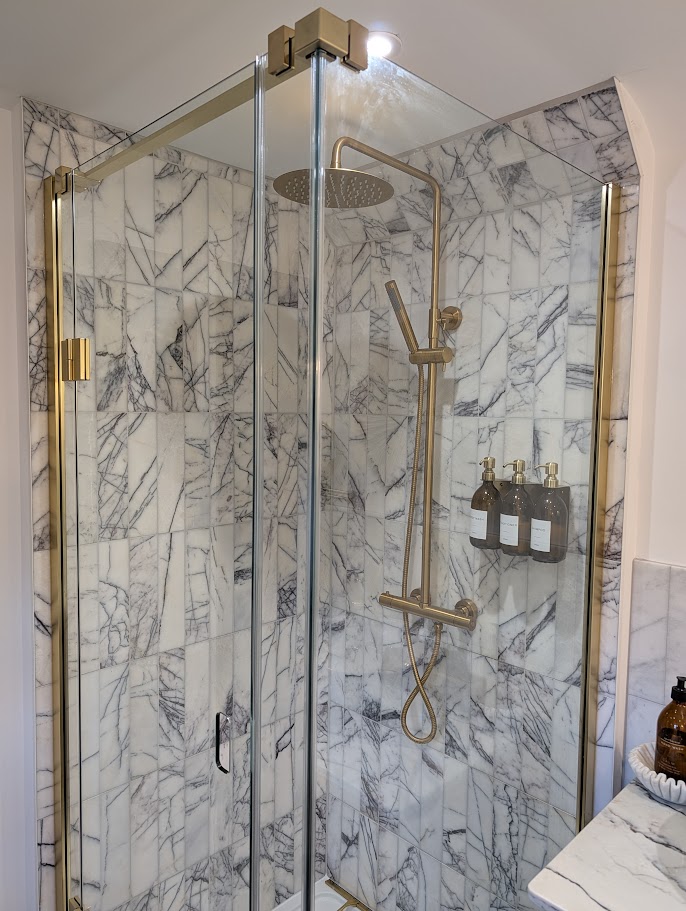
How we work it out
Bathrooms have been at the core of what we do since we opened our doors over 60 years ago, and we are still a family-run business in Uckfield fitting bathrooms across East Sussex. When we come out to look at a bathroom, the water system is among the first things we check, because it sets the boundaries for everything that follows, including which showers for low water pressure are even on the table.
We design, supply and install, which means the shower we specify is the one our own fitters have to make work on the day. That focuses the mind in a way that reading a product page does not. Alongside sanitary ware and furniture from names such as Roper Rhodes, we match the shower to the system rather than the other way around.
Come and see it in person
Settling on showers for low water pressure gets a great deal easier once somebody has actually looked at your tank, your cylinder and your pipework instead of guessing from a specification sheet. Our showroom on the Bellbrook Industrial Estate in Uckfield has bathroom ranges set up so you can see and feel what you are buying, and our process starts with a visit to your home. If you would like us to take a look at what you have, get in touch with the team and we will work out the system before anyone starts talking about products.