Kitchen Lighting Ideas That Make a Real Difference
Good lighting is the quiet detail that decides how a kitchen feels to be in, and the lighting ideas that make a real difference are usually the ones you stop noticing once they are right. If your kitchen looks flat in photos, leaves you working in your own shadow at the worktop, or feels harsh in the evening, the problem is almost always the lighting rather than the kitchen itself. The good news is that it is one of the easier things to plan well from the start. Below we have set out how we think about kitchen lighting at Cannadines, room by room and layer by layer, so you can work out what your own kitchen is missing.
Why kitchen lighting matters more than most people expect
A kitchen has to do more jobs than any other room in the house. It is where you chop, cook, eat, help with homework, pour a glass of wine and tidy up at the end of the day. One ceiling light cannot serve all of those moments, which is why so many kitchens feel either too dim to work in or too stark to relax in. Lighting a kitchen well means matching the light to the task, and that is the thinking behind almost every recommendation we make.
We are a family-run business in Uckfield, and we have designed and fitted kitchens across East Sussex for years. Our process always starts with a visit to your home so we can see the room, measure it and understand how you actually use it. Lighting is part of that conversation from the beginning, not something left until the units are already in.

Build your lighting in layers
The single most useful idea to take away is that good kitchen lighting works in layers. Rather than relying on one source, you combine three: task lighting, ambient lighting and accent lighting. When these layers are planned together, you can shift the room from bright and practical in the morning to soft and calm in the evening without touching a single unit.
Task lighting is the light you cook by. Ambient lighting is the general fill that stops the room feeling like a cave. Accent lighting is the finishing touch that adds warmth and picks out the parts of the kitchen you are proud of. Most kitchens that feel wrong are missing at least one of these layers, and the lighting ideas that make a real difference nearly always come down to getting the balance between the three right.
Task lighting where you actually work
Under-cabinet lighting is the change people notice most. Without it, anyone standing at the worktop is working in the shadow cast by their own wall units and the ceiling light behind them. A run of LED strip or a line of small spotlights fitted to the underside of your wall cabinets puts light exactly where you are preparing food, and it makes the whole worktop look better at the same time.
Islands and peninsulas need their own thought too, because they sit away from the wall cabinets and rarely get enough light from the ceiling alone. Pendant lights hung over an island are a popular answer, and they work as task lighting and a design feature at once. If you have a hob on an external wall, the extractor above it usually has a built-in light, but it is worth checking it is bright enough rather than assuming it will do the job.

Ambient lighting to fill the room
Ambient lighting is the general layer that lifts the whole room. In most kitchens this comes from ceiling lights, whether that is recessed spotlights set into the ceiling or a central fitting. The aim is even coverage with no dark corners, so the room feels open and comfortable before you add anything else.
How you arrange ceiling spotlights matters more than how many you fit. Spacing them sensibly and aiming them at the worktops and walkways gives a far better result than dotting them about at random. This is the kind of detail we plan alongside the layout, because the position of your units, the hob and the sink all affect where the light needs to fall.
Accent lighting for warmth and character
Accent lighting is where a kitchen starts to feel like yours. Lights set inside glazed cabinets, along an open shelf or above the wall units throw a softer glow that has nothing to do with cooking and everything to do with how the room feels late in the evening. Plinth lighting, fitted low down at the base of your units, casts a gentle wash across the floor and gives the kitchen a relaxed mood once the main lights are off.
These touches are easy to leave out and easy to love once they are in. They are also some of the simplest lighting ideas that make a real difference for very little extra work, especially in an open-plan kitchen where the room is on show in the evening rather than shut away behind a door.
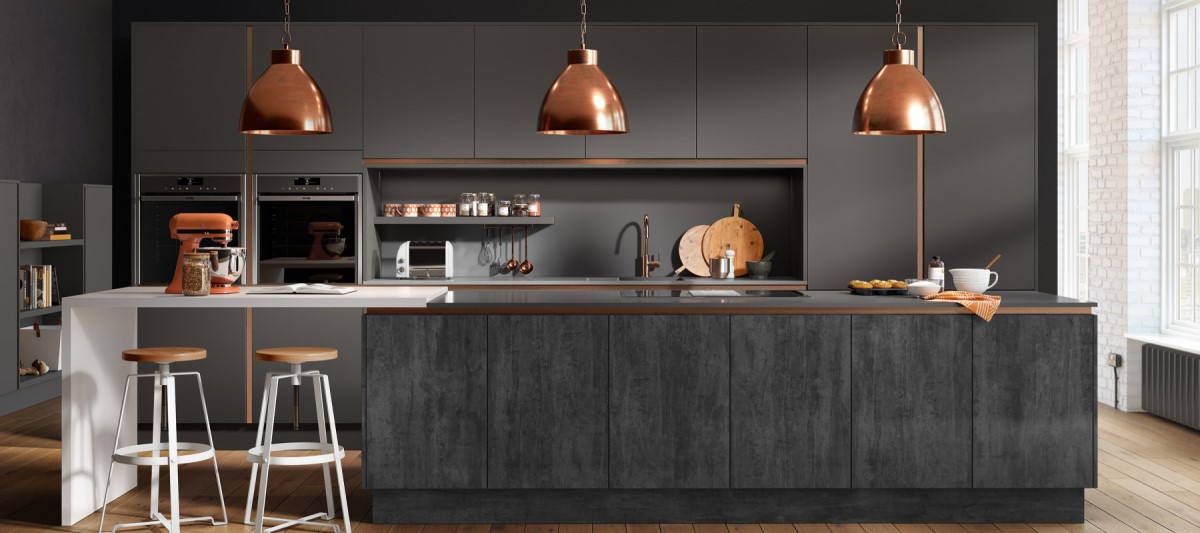
Don’t forget dimmers and controls
One of the cheapest upgrades you can make is putting your lighting on dimmer switches. The same kitchen needs bright, clear light at eight in the morning and something far softer over dinner, and dimmers let one room do both. We often suggest splitting the lighting across separate circuits as well, so your under-cabinet lights, ceiling lights and accent lights can be controlled independently rather than all coming on together.
Getting this right means thinking about the wiring early, before the walls are finished and the units are in. That is one of the practical reasons lighting belongs in the design stage. Our installers cover the electrical work as part of the project, so the plan we agree on paper is the plan that gets fitted.
Match the light to the rest of the kitchen
Two more things are worth a mention. The first is colour temperature, which is simply whether a bulb gives a warm, yellowish light or a cool, whiter one. Warmer tones tend to suit a relaxed family kitchen, while cooler light can work in a very modern, minimal scheme. Keeping your bulbs consistent matters, because a mix of warm and cool light in one room always looks slightly off.
The second is natural light. A kitchen with big windows or doors will need its electric lighting handled differently from a galley with one small window, and the finishes you choose play a part too. Pale, reflective surfaces bounce light around a darker room, while a deep, matt colour scheme will ask more of your lighting. We take all of this into account when we design a kitchen, rather than treating the lighting as a separate job at the end.
See it for yourself at our showroom
The best way to understand kitchen lighting is to stand in front of it, which is exactly what our Uckfield showroom is for. You can see under-cabinet lighting, pendants and accent lighting working in real kitchen settings and get a feel for what suits your own home before you commit to anything.
Lighting is only one part of the picture, of course. Our kitchens are built around ranges from Omega, our main supplier, including their Sheraton and English Rose collections, made in Yorkshire and available in everything from clean, modern designs to classic painted and Shaker styles. Alongside the cabinets, we supply the pieces that make a kitchen whole, from worktops in materials such as granite through to handles, flooring and appliances, all chosen to suit the look of your room. We have built relationships with some of the best names in British craftsmanship over the years, and our showroom holds a range of door samples, worktop finishes and handles for you to look through in person.
If you are planning a new kitchen and want lighting ideas that make a real difference rather than an afterthought, come and talk to us. Visit the showroom on the Bellbrook Industrial Estate in Uckfield, or get in touch with the team and we will be glad to help you plan a kitchen that works in every light, from first thing in the morning to last thing at night.