Walk-In Shower Ideas for Small Bathrooms
If you have a small bathroom and you’re not sure whether a walk-in shower is realistic, the short answer is that it usually is. Walk-in shower ideas for small bathrooms have come a long way, and with the right planning, the right layout and the right products, you can end up with a shower that’s easier to use and easier to clean than a traditional bath or enclosed shower cubicle, even in a very tight bathroom.
What Does “Walk-In” Actually Mean?
Before getting into the ideas, it’s worth being clear on the term. A walk-in shower simply means you step directly into the shower area either without needing to open a door or step over a high bath edge. That could be a fully tiled wet room, a shower with a fixed glass panel and an open entry, or a shower enclosure fitted with a door that doesn’t swing outward. What they have in common is easy, step-in access.
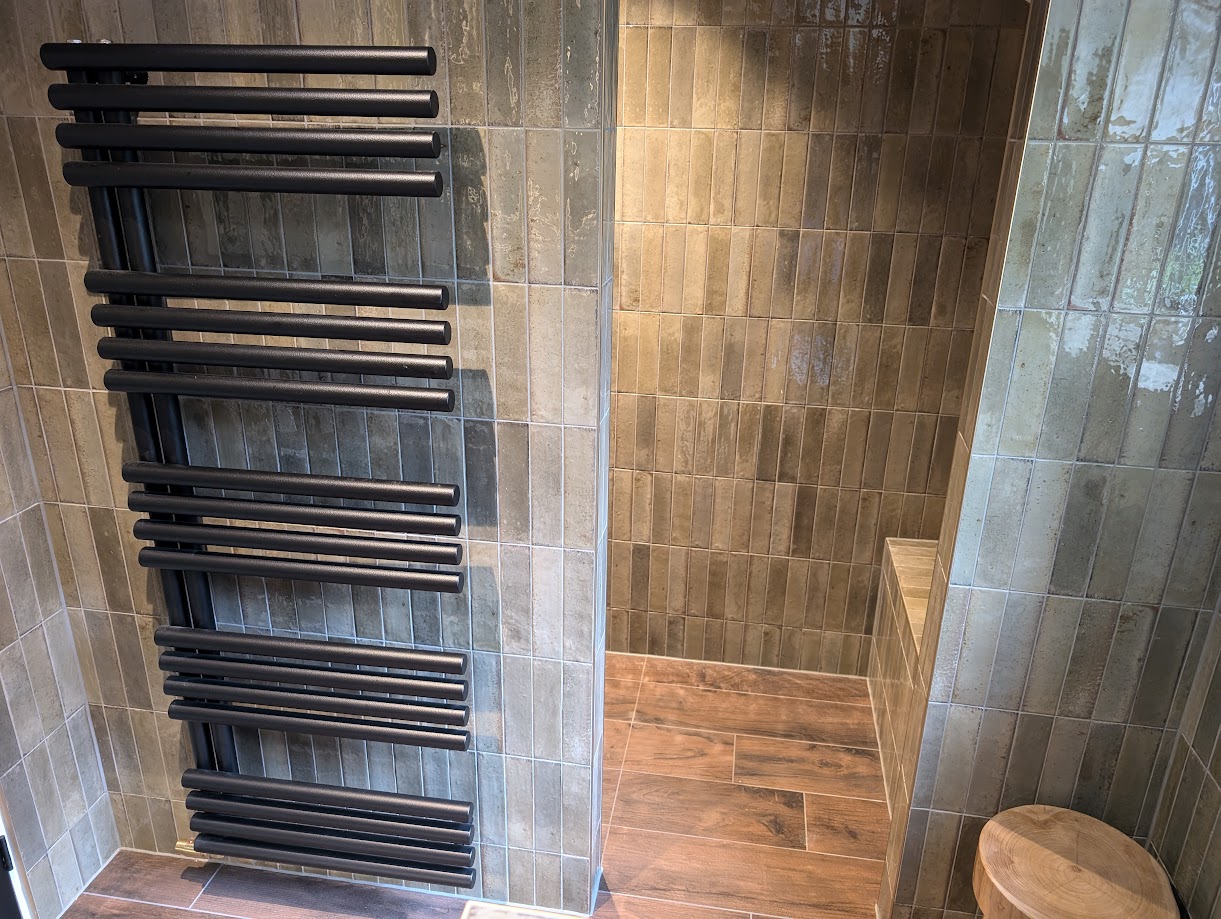
Choose the Right Shower Tray
In a small bathroom, the shower tray is one of the most important decisions. A low-profile or slimline tray, typically around 25mm to 40mm off the floor, sits close to the ground and makes stepping in straightforward, without the look or feel of a boxed-in unit.
Stone resin trays are a popular choice. They’re solid underfoot, they feel warm rather than cold, and they’re resistant to chipping. Acrylic trays tend to cost less and are lighter, but some can flex slightly underfoot as they age.
Think About a Wet Room
A wet room is the most open version of a walk-in shower. Instead of a raised tray and enclosure, the floor is fully waterproofed and tiled, sloping gently towards a drain. There’s no tray to step over and no enclosure to clean around, just a tiled floor, tiled walls and a simple drain.
Because everything is at floor level, wet rooms work very well in small bathrooms. Removing the tray and the enclosure reduces the visual bulk considerably, and the continuous floor line makes the whole bathroom feel less divided. They’re also much easier to use for anyone with mobility difficulties.
The key thing to understand is that a wet room must be installed correctly. The waterproofing process, commonly called tanking, involves applying a waterproof membrane to the walls and floor before tiling begins. If this is done poorly, water can penetrate into the structure of the building, which is a serious and costly problem to fix. This is not a job to cut corners on, and it should always be carried out by a professional with experience of wet room installation.

Think Carefully About Where You Position the Shower
In a small bathroom, where the shower sits is often the biggest factor in how well the whole bathroom works.
Placing the shower in a corner is usually the most efficient use of the available floor area. Two existing walls form two sides of the enclosure, which reduces the amount of glass needed and makes the whole thing feel more integrated with the room.
An alcove layout, where the shower fits into a recess between two walls, is even more efficient. Three walls form the enclosure, and you only need a door or glass panel across the front. This works particularly well in bathrooms that are long and narrow.
Shower Fittings and Fixtures
Once the layout is planned, the fittings are largely a matter of preference and budget, though a few things are worth knowing.
A fixed overhead shower head, often described as a rainfall shower, is mounted on the ceiling or on a rigid arm from the wall. It provides a wider, more even flow of water. In a small shower, a ceiling-mounted head can be the tidiest option because it doesn’t project into the showering area from the wall.
A thermostatic shower valve holds the water at a set temperature, which means no sudden shifts in temperature when someone uses a tap elsewhere in the house. It also allows you to set a maximum temperature, which is useful in homes with young children or elderly family members. These are a sensible upgrade if your budget allows.
A hand shower on a sliding bar gives flexibility for people of different heights and makes rinsing the walls and floor down after showering much easier.

Fixed Glass Panels Instead of a Full Enclosure
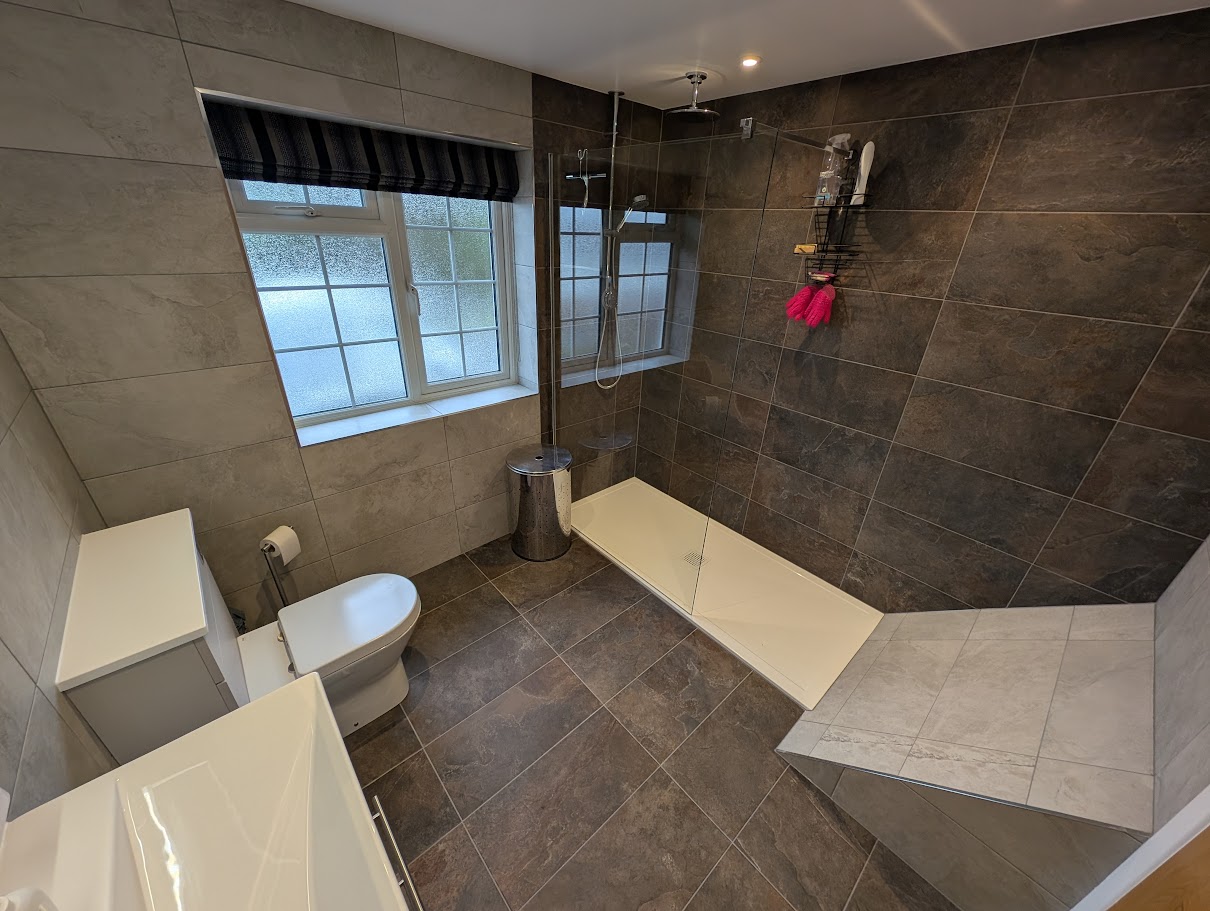
One of the most practical walk-in shower ideas for small bathrooms is the fixed glass panel. Rather than fitting a full enclosure with a door, you have one or two panels of toughened glass acting as a splash screen, with an open entry, you step in from the side or front without opening anything.
This solves a common problem in small bathrooms: a hinged shower door needs space to swing open. In a tight layout, that often means the door clashes with the toilet, the basin or the wall. A fixed panel removes that problem completely.
Frameless glass panels, where the glass is held by minimal fittings rather than a full aluminium frame, tend to look less bulky and are easier to keep clean. Thick frames and channels collect soap scum and limescale, and they can be fiddly to clean properly. Frameless or semi-frameless options have far less of that to deal with.
Don’t Overlook Ventilation
This is the thing that’s easiest to forget when thinking through walk-in shower ideas for small bathrooms. A shower produces a lot of steam, and without adequate ventilation, that moisture ends up in your walls, ceiling and grout joints, which leads to damp, mould and deteriorating finishes.
A bathroom extractor fan is essential. It needs to be appropriately sized for the bathroom and ideally wired to switch on automatically when the light goes on, with an overrun timer so it continues running for several minutes after the light is switched off. If your bathroom doesn’t currently have a fan, or the existing one is old or undersized, fitting a new shower is the right time to sort it out.
Ventilation should be discussed at the planning stage of any bathroom project, not added in as an afterthought once the rest of the work is finished.
Practical Points to Consider Before You Start
Before committing to any layout or product, there are a few practical questions worth working through:
Plumbing position: Where are your existing hot and cold supply pipes? Moving pipework adds cost and time, so positioning the shower near the existing supply is usually the more cost-effective approach.
Drainage: Your shower waste needs to connect to an existing drain or soil stack. A plumber can advise on what’s achievable with your specific bathroom layout.
Floor structure: Wet rooms require a specific build-up under the tiles for the tanking and drainage. Timber suspended floors can be adapted, but it’s more complex than working on a solid concrete floor, and this needs to be assessed before work starts.
Electrical work: In England, electrical work in bathrooms, including shower wiring, must comply with Part P of the Building Regulations. A registered electrician must carry out and certify this work. Any professional bathroom installer will manage this as part of the project.
Talk to Someone Who Knows What They’re Doing
The most useful walk-in shower ideas for small bathrooms are the ones that actually work in your specific bathroom, given its dimensions, its plumbing layout, its floor structure and how you use it every day. What works well in one bathroom may not be practical in another, and it’s always worth talking to an experienced professional before making any firm decisions.
At Cannadines, we’ve been designing and fitting bathrooms across Uckfield and East Sussex for over 60 years. We work with Calypso and Roper Rhodes for bathroom furniture and sanitaryware, two well-established names in the UK bathroom industry with a wide range of styles to suit different tastes and budgets. For flooring, we work with Karndean, whose luxury vinyl flooring is a practical and popular choice in bathrooms. If you’re interested in smart lighting and controls for your bathroom, we also work with Rako Controls.
Get in touch with our team today or visit our showroom in Uckfield to see the ranges we work with in person, it makes a real difference to see and handle the products before committing to anything.